Quality Assurance
We guarantee top-quality epoxy resin products that are made to achieve the highest safety standards with our food-safe resin coating, ensuring your peace of mind.
That chemical smell hits before you even mix the components. It fills your craft room, seeps into adjacent spaces, and lingers for days. Perhaps you've avoided epoxy projects because the odor made working indoors unbearable.
Odorless epoxy resin delivers crystal clear results without harsh chemical fumes through VOC-free formulations and low-odor hardener systems. These specialized products allow comfortable indoor crafting, jewelry making, and coating applications in home studios, apartments, and shared workspaces where ventilation is limited.
Understanding what creates odor in traditional epoxy, and how truly low-odor products differ, helps you select formulations that make indoor resin work comfortable rather than oppressive.
The sharp scent of standard epoxy comes from volatile compounds that evaporate during mixing and curing.
Most traditional formulations contain solvents and reactive diluents that reduce viscosity. These additives make the resin easier to pour and mix, but they don't become part of the cured structure, they simply evaporate into your workspace.
Common odor sources:
1. Amine hardeners with characteristic smell
2. Solvent carriers for improved flow
3. Reactive diluents that off-gas during cure
4. VOCs (volatile organic compounds) releasing fumes
The higher the VOC content, the stronger and more persistent the smell becomes.
Creating genuinely low-odor epoxy requires premium base materials and careful chemistry.
The foundation starts with zero-VOC formulation.
100% solids composition means every component becomes part of the cured structure. Nothing evaporates. This eliminates the primary odor source, volatile carriers that disappear during cure.
Even solvent-free products can smell from hardener chemistry.
Premium odorless formulations use modified amine hardeners specifically engineered to reduce smell while maintaining:
1. Proper cure characteristics
2. Crystal clear finish
3. Mechanical strength
4. Long-term durability
These advanced hardener systems cost more but make the difference between products you can work with comfortably and formulations that clear the room.
Complete absence of smell remains rare.
Most "odorless" epoxy has a very faint chemical scent if you put your nose directly above the mixed resin. The key difference is this minimal odor doesn't fill the room, bother family members, or persist after you finish working.
Low-odor products transform where and how you can create resin art.
Home studio advantages:
1. Work in spare bedrooms without evacuating the house
2. Use dining tables for crafting without lingering smells
3. Create in apartments without neighbor complaints
4. Craft comfortably while children play in adjacent rooms
You can mix, pour, and cure projects in residential spaces without strong chemical odors permeating your living environment.
Comfort matters during multi-hour projects.
Traditional epoxy's fumes force frequent breaks or drive you from the workspace entirely. Odorless formulations allow extended crafting sessions without headaches, nausea, or respiratory discomfort that harsh chemical smells cause.
Multiple pours over several days don't create cumulative smell buildup that makes your studio unpleasant for the next session.
Odorless epoxy suits diverse creative applications where smell would otherwise be problematic.
Small casting projects benefit enormously from low-odor formulations.
Jewelry applications:
Working with small quantities in residential spaces makes odorless products essential. The minimal smell doesn't overwhelm small rooms where jewelry makers typically work.
Artists particularly appreciate formulations that don't create harsh fumes.
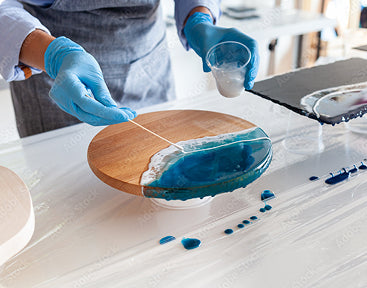
Coating canvases, creating coasters, making decorative trays, and producing wall art all work beautifully with odorless epoxy kit products. The crystal clear finish maintains color vibrancy while the low-odor characteristics allow comfortable indoor creation.
Pour epoxy for artistic applications flows smoothly and self-levels without the chemical smell that makes traditional art resin difficult to work with in home studios.
Deep pour casting in molds generates significant epoxy volume.
Casting epoxy for larger projects produces more potential odor simply due to quantity. Low-odor formulations become even more important when working with gallon or multi-gallon pours that traditional products would make unbearable indoors.
Applying clear epoxy to wood surfaces indoors requires low-odor products.
Coffee tables, dining tables, bar tops, and decorative furniture gain protective coatings without forcing you to work outdoors or endure days of chemical smells in your home. The virtually odorless nature allows furniture coating where the piece will be used.
Odorless doesn't mean compromised clarity or performance.
Premium low-odor formulations cure to crystal clear finishes that rival or exceed traditional products. The absence of volatile solvents actually improves clarity, fewer components means less that can yellow or cloud the cured resin.
Quality odorless epoxy delivers impressive gloss without polishing.
The self-leveling properties create smooth, glass-like surfaces that showcase colors brilliantly. Whether you're coating art, creating jewelry, or protecting wood, the high-gloss finish makes projects look professional.
Many odorless formulations include UV stabilizers.
This prevents yellowing from sunlight exposure that affects inferior products. Your clear epoxy projects maintain clarity and color vibrancy through years of display rather than developing amber tints within months.
Low-odor products typically feature user-friendly characteristics.
Most odorless epoxy kits use convenient equal-volume mixing.
Measure 1:1 or 2:1, no complicated ratios or calculations. This simplicity reduces mixing errors that cause incomplete cure or cloudy results.
Premium formulations minimize bubble formation during mixing.
The resin viscosity allows bubbles to rise and escape before the epoxy gels. Heat gun or torch application removes any surface bubbles quickly, leaving crystal clear cured surfaces.
Comfortable odor-free work allows better results.
You're not rushing to finish before fumes become unbearable. The extended working time lets you carefully position elements, remove bubbles thoroughly, and achieve the precise results you envision.
Odorless formulations often align with other safety features.
Many low-odor products carry non-toxic certifications for fully cured surfaces.
This makes them suitable for items that contact skin, jewelry, coasters, decorative bowls. Some formulations achieve food safe ratings for cutting boards or serving pieces, though you should verify specific certifications rather than assuming all odorless products are food safe.
The absence of VOCs and strong fumes reduces respiratory irritation.
People with asthma, allergies, or chemical sensitivities often tolerate odorless formulations better than traditional products. While proper ventilation remains advisable, the dramatically reduced fumes make resin work accessible to more people.
Low odor doesn't eliminate the need for gloves.
Uncured epoxy can cause skin irritation and allergic sensitization regardless of smell. Always wear nitrile gloves when handling liquid resin and hardener. The odorless characteristic addresses airborne fumes, not contact precautions.
Fast-cure formulations speed project completion without compromising quality.
Many odorless craft epoxies cure hard enough to demold within 12-24 hours.
This quick turnaround lets you complete projects faster. Small castings often release from molds in under a day, allowing multiple projects per week rather than waiting days between pours.
Maximum hardness develops over 7 days for most formulations.
Initial cure provides handling strength, but full mechanical properties require complete chemical crosslinking. Patience during this development period ensures your projects achieve maximum scratch resistance and durability.
Warmer conditions accelerate cure; cooler temperatures slow it.
Working at 70-75°F provides optimal results. Very cold rooms may extend cure times significantly, while hot environments can cause too-rapid cure that traps bubbles or creates uneven surfaces.
Not all products claiming odorless performance deliver equivalent results.
Look for explicit VOC-free or zero-VOC certification.
Vague claims about "reduced odor" don't guarantee truly low-smell performance. Specific VOC content below 5 g/L indicates genuine low-odor formulation rather than marketing language.
Reviews mentioning minimal smell provide real-world verification.
Traditional epoxy consistently receives complaints about overwhelming fumes. Truly odorless products get comments like "barely any smell" or "can work in my bedroom comfortably." Multiple reviews praising low odor indicate authentic performance.
Premium odorless formulations cost more than standard products.
Creating genuinely low-odor epoxy requires expensive base materials and specialized hardener chemistry. Budget products claiming odorless performance often disappoint, they may smell less than traditional epoxy but still produce noticeable odor.
Expect to pay 20-40% more for quality odorless formulations. The premium reflects the specialized chemistry needed for comfortable indoor use.
Proper storage extends usability of your resin kit.
Store in cool, dry locations away from direct sunlight.
Extreme temperatures can cause premature curing or material degradation. Room temperature storage (60-75°F) maintains quality for 1-2 years in unopened containers.
Keep containers tightly sealed between uses.
Moisture contamination affects cure characteristics and can cloud the resin. Wipe bottle threads clean before sealing to ensure proper closure.
Yellowing or cloudiness in unopened resin suggests aging.
Quality products remain water-clear in the bottle. If unused resin appears yellow or cloudy, it may have exceeded shelf life. Hardener crystallization sometimes occurs in cold storage, warming to room temperature usually resolves this.
Even premium products occasionally present challenges.
Sticky surfaces indicate mixing ratio problems or insufficient cure time.
Verify you're measuring resin and hardener accurately. Temperature below 60°F dramatically slows cure, warming the workspace often resolves soft cure issues.
Trapped air reduces clarity and visual appeal.
Mix slowly to minimize air incorporation. Pour from a height to help bubbles escape. Apply a heat gun or torch immediately after pouring to bring surface bubbles up where they can pop.
Moisture contamination or incompatible additives cause cloudiness.
Work only with completely dry molds and surfaces. Ensure any colorants or additives are specifically designed for epoxy use. Some acrylic paints contain water that clouds resin, use alcohol-based dyes or epoxy-specific pigments instead.
Low-odor products often feature environmentally friendly characteristics.
VOC-free formulations don't contribute to air pollution or smog formation.
This matters environmentally and for indoor air quality. Working with zero-VOC products doesn't introduce harmful compounds into your home atmosphere.
Cured odorless epoxy typically allows standard disposal.
Unlike hazardous formulations requiring special waste handling, fully cured low-VOC products often qualify as regular solid waste. Check local regulations, but the reduced chemical content simplifies disposal compared to traditional products.
Empty containers can usually be discarded after residual material cures.
Allow any remaining resin to harden completely in the bottles before recycling or disposal. This prevents liquid epoxy from entering waste streams.
We guarantee top-quality epoxy resin products that are made to achieve the highest safety standards with our food-safe resin coating, ensuring your peace of mind.
With years of experience in the industry, we have the knowledge and expertise to provide you with the best solutions for your food-safe projects.

Our extensive range of epoxy resin products offers options for every need and budget, ensuring that you find the perfect fit for your project.
At Epoxy King, customer satisfaction is our priority. We strive to exceed your expectations with our products and service, earning your trust and loyalty.

When you choose Epoxy King, you can count on reliable products and dependable service every time. Trust us for all your food-safe epoxy needs and experience the difference.
Here’s a comprehensive FAQ that covers various aspects
Odorless epoxy works perfectly for outdoor applications when formulated with UV stabilizers that prevent yellowing. The low-odor characteristic addresses indoor comfort during application rather than limiting where cured pieces can be used. Many odorless formulations include UV resistance for outdoor projects like garden art, address signs, or patio decorations. However, verify specific products include UV protection rather than assuming all odorless epoxy resists sunlight. Indoor-focused craft resins may lack UV inhibitors since they're designed for pieces displayed away from direct sun. Check product specifications for UV-resistant or outdoor-rated designations.
Low-odor epoxy typically cures at similar rates to standard formulations, the odorless characteristic doesn't significantly affect cure speed. Most craft-grade odorless products cure to handling strength within 12-24 hours and reach full hardness in 7 days, matching traditional epoxy timelines. Some fast-cure odorless formulations demold in as little as 8-12 hours. Cure speed depends more on temperature, mixing ratio accuracy, and specific product chemistry than odor level. Working at recommended temperatures (70-75°F) ensures optimal cure regardless of whether you're using odorless or traditional products. Cold temperatures slow curing for all epoxy types.
Yellowing relates primarily to UV exposure and resin quality rather than odor characteristics, though many premium odorless formulations include UV stabilizers since they target quality-conscious users. Low-odor products with UV resistance maintain clarity significantly better than standard epoxy exposed to sunlight. However, odorless status alone doesn't prevent yellowing, verify the product specifically includes UV inhibitors. Indoor pieces protected from direct sunlight rarely yellow regardless of formulation. For outdoor projects or sunny window displays, choose odorless epoxy explicitly labeled UV-resistant or UV-stabilized to maintain crystal clear appearance through years of exposure.
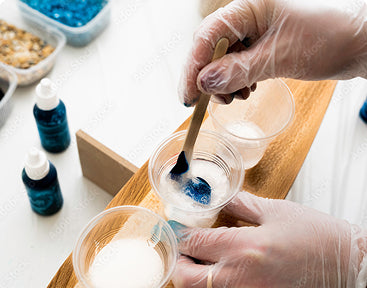
Yes, adding appropriate colorants to odorless epoxy doesn't increase odor when using alcohol-based dyes or epoxy-specific powder pigments at recommended concentrations (typically 3-6% by weight). These colorants don't introduce volatile compounds that create smell. Avoid acrylic paints or water-based products that can cloud resin and may introduce moisture-related odors. Mix pigments thoroughly into resin before adding hardener for even color distribution. Excessive pigment loading can affect cure characteristics but won't specifically increase odor. Stick to colorants designed for epoxy use to maintain the low-odor benefits while achieving vibrant colors in your projects.
Odorless epoxy is safer for environments where children are present compared to traditional high-VOC formulations, but adult supervision remains essential during mixing and application. The low fumes make working near children more comfortable, but uncured resin still requires proper handling. Children should not mix or apply epoxy themselves due to skin sensitization risks, adults should handle all liquid resin work. Once fully cured (typically 7 days), odorless epoxy becomes inert and safe for children to handle as jewelry, art pieces, or decorative items. Look for products with ASTM D4236 certification and non-toxic ratings for additional safety assurance in educational or family crafting environments.
Stop letting chemical fumes limit your creativity. Epoxy King odorless resin formulations deliver crystal clear, high-gloss results without the harsh smells that make traditional epoxy unbearable indoors. Our VOC-free, low-amine chemistry allows comfortable work in home studios, apartments, and shared spaces where air quality matters. Experience resin crafting the way it should be, focused on your art, not fighting fumes. Browse our range of odorless epoxy kits and transform your indoor workspace into a comfortable creative environment today.