Quality Assurance
We guarantee top-quality epoxy resin products that are made to achieve the highest safety standards with our food-safe resin coating, ensuring your peace of mind.
When projects demand maximum durability, standard adhesives simply won't deliver. Epoxy King's rigid epoxy resin formulations provide rock-solid strength for applications where failure isn't an option. Our durable epoxy resin systems cure to glass-like hardness while maintaining the chemical resistance and adhesion strength that professionals demand.
Rigid epoxy resin represents the pinnacle of thermoset polymer technology, engineered to achieve maximum hardness and strength after curing. These specialized formulations create cross-linked molecular structures that resist deformation, impact, and wear far beyond what standard epoxy systems can provide.
The chemistry involves carefully selected hardener systems that promote dense cross-linking during the curing process. This polymerization creates materials with Shore D hardness ratings often exceeding 85, approaching the hardness of some metals. Perhaps more importantly, this hardness doesn't come at the expense of adhesion strength or chemical resistance.
Professional fabricators and engineers choose these systems when project specifications demand uncompromising performance. The result is a thermoset material that maintains its properties under stress, temperature changes, and chemical exposure that would cause softer materials to fail.
High-strength epoxy resin systems achieve compressive strengths exceeding 13,000 PSI with tensile strengths over 7,000 PSI. This combination of properties makes them ideal for structural applications where mechanical loads are significant.
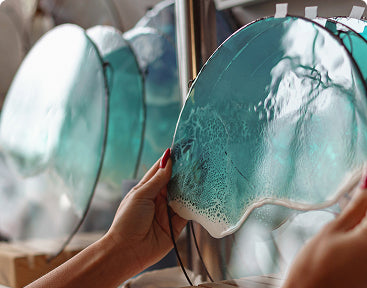
Clear, rigid formulations cure to glass-like finishes with excellent optical clarity. This makes them perfect for protective coatings, decorative applications, and situations where appearance matters as much as performance.
Dense cross-linking creates molecular structures that resist penetration from solvents, mild acids, and other chemicals. This chemical resistance surpasses that of softer epoxy systems significantly.
High-quality rigid systems maintain their properties at elevated temperatures, often remaining stable up to 190°F or higher. This thermal stability proves critical in automotive, aerospace, and industrial applications.
Low shrinkage during cure combined with excellent creep resistance means parts maintain their dimensions under load. This characteristic becomes crucial for precision applications and tooling.
Despite their hardness, quality systems bond exceptionally well to fiberglass, carbon fiber, metals, and other substrates. Proper surface preparation can achieve bond strengths exceeding the substrate material itself.
FRP (Fiber Reinforced Plastic) fabrication relies heavily on strong epoxy resin systems for laminating carbon fiber and fiberglass components. Aerospace, automotive, and marine industries demand the strength-to-weight ratios these materials provide.
Master patterns, molds, and fixtures require materials that maintain dimensional accuracy under repeated use. High-strength systems provide the durability needed for production tooling while offering superior surface finish.
Industrial facilities subject floors to heavy equipment, chemical spills, and constant traffic. Rigid epoxy flooring systems create seamless surfaces that resist wear, impact, and chemical attack while maintaining their appearance.
Circuit boards and sensitive electronics require protection from moisture, vibration, and temperature changes. Clear, durable formulations provide this protection while allowing visual inspection of components.
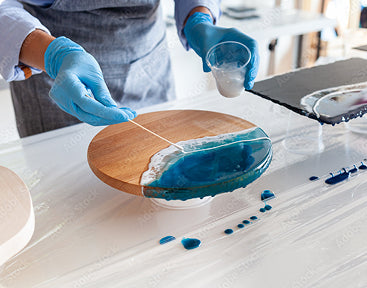
River tables, bar tops, and artistic pieces benefit from the crystal-clear finish and deep gloss that quality systems provide. The hardness prevents scratching and clouding that would ruin the appearance over time.
Critical joints in aerospace, marine, and industrial applications demand adhesives stronger than mechanical fasteners. High-strength systems create bonds that distribute loads effectively while resisting fatigue failure.
Standard formulations use general-purpose hardeners that create adequate cross-linking for typical applications. High-strength systems employ specialized curing agents that maximize cross-link density, resulting in superior mechanical properties.
Rigid systems often have shorter working times due to their rapid curing characteristics. This requires more precise planning and potentially working in smaller batches to ensure proper application.
Both systems benefit from proper preparation, but high-strength applications often demand more rigorous procedures to achieve maximum bond strength and performance.
Success with rigid systems demands meticulous surface preparation. Remove all contamination, achieve proper surface profile, and ensure complete dryness before application. Any shortcuts here compromise the exceptional properties these systems offer.
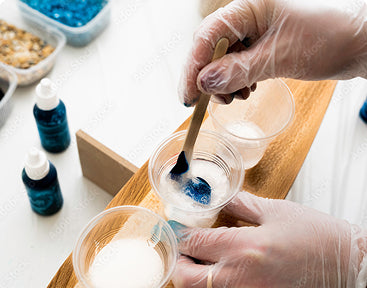
Precise ratios become even more critical with high-strength formulations. Use accurate measuring equipment and mix thoroughly to ensure complete chemical reaction. Incomplete mixing creates weak spots that negate the performance advantages.
Ambient temperature affects both working time and final properties. Maintain consistent temperatures during application and cure. Cold conditions may require heating, while hot weather might necessitate air conditioning or scheduling work during cooler periods.
Thick sections generate significant exothermic heat that can cause cracking or incomplete cure. Plan application thickness carefully and consider multiple thin coats rather than single thick applications.
Document all mixing ratios, temperatures, and timing. Test samples can verify proper cure and help troubleshoot any issues. These records prove valuable for warranty claims and future similar projects.
Shorter pot life requires careful planning and sometimes working in smaller batches. Have all materials prepared and surfaces ready before mixing to maximize available working time.
Large mass applications can generate enough heat to cause problems. Use slower hardeners for thick sections or plan multiple thinner applications to manage heat buildup.
High viscosity can trap air bubbles that weaken the final product. Vacuum degassing before use and careful pouring techniques help minimize this issue.
Despite excellent bonding capabilities, inadequate surface preparation still causes failures. Take extra time with cleaning and preparation - the performance benefits justify the additional effort.
Contamination, improper mixing, or environmental conditions can affect appearance. Maintain clean work areas and control temperature and humidity during application and cure.
High-strength systems typically reach gel stage faster than standard formulations. This means less time for repositioning or adjustments once application begins.
The cross-linking process generates heat, with rigid systems often producing more heat than softer alternatives. Monitor thick sections to prevent overheating that could cause cracking.
While many systems appear hard within hours, full mechanical properties develop over days. Avoid loading or stressing parts until complete cure is achieved.
Some applications benefit from elevated temperature post-cure cycles that maximize cross-linking and optimize properties. This becomes especially important for high-temperature service applications.
Harder surfaces resist abrasion, scratching, and indentation that would quickly damage softer materials. This translates to longer service life and maintained appearance.
Rigid materials distribute point loads over larger areas, preventing localized stress concentrations that cause failure. This becomes crucial in structural applications.
Hard materials resist creep and deformation under load, maintaining their shape and dimensions over time. Critical for precision applications and long-term reliability.
Dense cross-linking in rigid systems creates better barriers against chemical penetration, providing superior protection for underlying substrates.
We guarantee top-quality epoxy resin products that are made to achieve the highest safety standards with our food-safe resin coating, ensuring your peace of mind.
With years of experience in the industry, we have the knowledge and expertise to provide you with the best solutions for your food-safe projects.

Our extensive range of epoxy resin products offers options for every need and budget, ensuring that you find the perfect fit for your project.
At Epoxy King, customer satisfaction is our priority. We strive to exceed your expectations with our products and service, earning your trust and loyalty.

When you choose Epoxy King, you can count on reliable products and dependable service every time. Trust us for all your food-safe epoxy needs and experience the difference.
Here’s a comprehensive FAQ that covers various aspects
Quality rigid formulations achieve Shore D hardness ratings of 80-90, approaching the hardness of some thermoplastics and soft metals. This represents exceptional hardness for organic materials.
Yes, the hardness that makes these systems durable also makes them excellent for sanding and polishing to achieve mirror-like finishes. Start with coarser grits and progress to fine polishing compounds.
Most high-quality systems remain usable for 12months when stored properly in sealed containers at moderate temperatures. Check expiration dates and rotate stock regularly.
While hand mixing works for small batches, mechanical mixers ensure thorough blending for larger quantities. The short working times make efficient mixing essential.
Many rigid systems include UV stabilizers for outdoor use, though some clear formulations may yellow over time. Check specific product specifications for UV resistance ratings.
Incorrect ratios compromise both mechanical properties and cure characteristics. The resulting material may remain soft, cure incompletely, or develop poor adhesion.
Protects surfaces from spills and harsh chemicals. Ideal for tough, high-use areas.
A smooth, high-gloss flooring solution that levels itself for a seamless, durable, and professional finish.
A durable, versatile resin system perfect for strong bonding, coatings, and creative projects.
High-strength bonding material that fills cracks or voids without shrinking, ensuring durable and dimensionally stable repairs.