Quality Assurance
We guarantee top-quality epoxy resin products that are made to achieve the highest safety standards with our food-safe resin coating, ensuring your peace of mind.
Will epoxy resin actually survive outdoors? It's a fair question. Sunlight, rain, temperature swings, these conditions destroy standard indoor coatings within months.
Outdoor epoxy resin offers weatherproof protection for furniture, concrete surfaces, decorative pieces, and marine applications, when formulated correctly. Standard indoor epoxy turns yellow and degrades quickly under UV exposure.
Outdoor-specific formulations incorporate UV stabilizers and weather-resistant additives that maintain clarity and structural integrity through years of sun, rain, and temperature changes.
Understanding what makes outdoor epoxy different helps you select products that withstand exterior conditions rather than failing prematurely.
Two-part epoxy systems share the same basic chemistry, resin and hardener components that cure through chemical reaction. The difference lies in protective additives mixed into the base resin.
These compounds absorb or deflect ultraviolet radiation before it can break down the epoxy's molecular bonds. Without them, standard epoxy yellows noticeably within weeks of direct sunlight exposure and becomes brittle over several months.
Hindered Amine Light Stabilizers (HALS) represent the most effective UV protection technology currently available.
These additives work differently than simple UV absorbers, they actually neutralise free radicals created when UV light hits the epoxy surface. Think of them as continuously repairing damage rather than just blocking it.
Temperature cycling causes expansion and contraction. Quality outdoor epoxy maintains flexibility through this movement without cracking.
Typical performance range:
Marine epoxy takes weather resistance further. Constant water immersion demands formulations that resist water penetration at the molecular level.
Marine-grade products typically include enhanced adhesion promoters and moisture barriers that prevent osmotic blistering, the bubbling that occurs when water penetrates beneath the coating.
The thickness of outdoor epoxy often differs from indoor products.
Thinner formulations flow more easily, which helps with coating irregular surfaces like rough concrete or weathered wood. Thicker, gelled varieties work better for vertical applications where you can't afford sagging during cure.
Pour depth limitations typically range from 1/4" to 3/8" per layer, depending on the specific product formulation.
I think yellowing deserves its own discussion because it's the most visible sign of UV damage.
All epoxy yellows eventually when exposed to sunlight. Even UV-resistant formulations aren't immune, they just slow the process dramatically.
Yellowing timeline comparison:
1. Standard epoxy: Noticeable yellowing within one month
2. Quality outdoor epoxy with HALS: Maintains clarity for years
3. Extended exposure: Some yellowing will occur eventually
The thickness of your coating affects yellowing rate. Thicker applications yellow more obviously because more material is present to change colour.
A thin seal coat yellows less noticeably than a deep pour, even with identical UV exposure.
Transparent outdoor epoxy shows yellowing clearly. Pigmented or tinted epoxy hides the yellowing effect, the added colour masks the amber shift that would otherwise be visible.
This makes tinted formulations a practical choice for projects where maintaining crystal-clear appearance is important.
Outdoor epoxy finds use across surprisingly diverse applications. Different projects demand different performance characteristics.
Wooden tables, benches, bar tops, and decorative pieces gain waterproof protection and scratch resistance.
Benefits for furniture:
The epoxy coating prevents moisture absorption that causes wood to warp, split, or rot. It also creates a smooth surface where spilled drinks and food don't penetrate.
Patios, driveways, pool decks, and walkways benefit from the protective barrier epoxy provides.
The coating prevents water infiltration, reduces cracking from freeze-thaw cycles, and resists staining from oils and chemicals.
However, not all outdoor epoxy works for concrete floors. Some formulations designed for furniture or decorative items lack the abrasion resistance needed for foot or vehicle traffic.
Check product specifications carefully before selecting a concrete coating system.
Boat repairs, dock construction, and watercraft modifications require products that withstand constant water exposure plus UV radiation.
Marine epoxy typically offers:
These specialised formulations cost more but provide necessary performance for aquatic environments.
Outdoor signage, address markers, garden art, and resin sculptures prioritise clarity and colour retention over heavy-duty durability.
UV protection becomes critical since artistic projects often feature transparent or lightly tinted areas where yellowing would be immediately obvious.
Outdoor coasters, game boards, and camper countertops sit in an interesting middle ground. They face outdoor conditions but not necessarily continuous exposure.
Perhaps they're used outside but stored inside. Or they're in covered areas that receive indirect sunlight. These applications often work fine with moderately UV-resistant formulations rather than requiring maximum protection.
Product selection determines whether your outdoor project succeeds or fails prematurely. Several factors guide this choice.
Protection varies significantly between products.
Three tiers of UV protection:
Match the protection level to your exposure conditions. Full-sun locations demand maximum UV resistance. Shaded areas or projects with seasonal outdoor exposure can use moderate protection.
Standard outdoor epoxy handles typical seasonal temperature ranges.
If you're in desert regions with extreme heat or northern climates with severe cold, verify the product's temperature tolerance. Some formulations specifically target hot or cold weather performance.
Climate matters more than people realise for cure success.
Furniture coatings face different demands than floor systems.
Projects that see regular physical contact need harder cure formulations. A tabletop sees plates, glasses, and items being moved across the surface. A decorative sign rarely experiences contact.
The required hardness differs accordingly.
Basic water resistance prevents rain damage. Full waterproofing withstands submersion, necessary for applications like pond sealing, fountain construction, or marine repairs.
Concrete coatings typically need good water resistance but not full submersion capability.
Self-leveling epoxy works beautifully for flat surfaces, it flows and settles to create smooth coatings.
Gelled or thickened varieties are necessary for vertical surfaces where runny epoxy would sag before curing.
Quick-setting formulations give you perhaps 20 minutes to mix, pour, and spread the epoxy before it becomes too thick to work.
Extended pot life products offer 45 minutes to an hour. Larger projects or intricate applications benefit from longer working times.
Warmer temperatures reduce working time regardless of formulation, something to keep in mind when working outdoors during summer months.
Surface preparation determines how well outdoor epoxy bonds and performs long-term. Shortcuts here cause adhesion failures that require complete removal and starting over.
Wood surfaces need sanding to expose fresh material, old finishes, weathered grey wood, and contaminants must be removed.
Preparation checklist:
Concrete requires degreasing and mechanical preparation. Metal demands rust removal and proper priming.
Surfaces must be completely dry before application, even though the cured epoxy itself is waterproof.
Apply epoxy to damp wood or concrete and you'll likely see:
Wait for dry weather and verify moisture content before mixing your resin.
Most products specify an ideal range, typically 60°F to 80°F for application.
Below minimum temperature, the epoxy may never fully cure or take days longer than expected. Above maximum temperature, it can cure too fast, potentially causing bubbles or incomplete leveling.
Don't apply epoxy in direct sunlight, even when using outdoor formulations. The surface heating causes accelerated cure that doesn't allow proper flow and leveling.
Apply indoors or in shade, then move the project to its final outdoor location after initial cure.
Two-part epoxy requires precise ratio mixing, typically 1:1 by volume, though some products use 2:1 or other ratios.
Use measuring containers, not estimation. Incorrect ratios produce epoxy that never fully hardens or develops proper weather resistance.
Proper mixing technique:
This ensures any unmixed material clinging to the first container's edges gets properly blended.
Most outdoor epoxy specifies maximum pour depth per layer, often 3/8" or 1/2".
Deeper applications require multiple pours, allowing each layer to partially cure before adding the next. This prevents excessive heat buildup during cure and reduces bubble formation.
Pass a heat gun or torch lightly across the surface immediately after pouring, the heat causes bubbles to rise and pop.
Don't overheat; excessive heat can damage the epoxy or cause ripples. Multiple light passes work better than one intense application.
Understanding the curing process helps set realistic expectations about when your project can face outdoor conditions.
Initial cure typically takes 24 hours. The surface becomes hard enough to resist indentation but hasn't reached full strength.
Some products remain tacky for up to 14 hours, resist touching during this period even though it's tempting to check progress.
Full cure requires 7 days minimum for most outdoor formulations.
During this period:
Don't expose the project to rain, temperature extremes, or heavy use before full cure completes.
Warmer conditions accelerate curing; cooler temperatures slow it.
At 50°F, cure time might triple compared to application at 75°F. This isn't necessarily bad, slower curing can actually produce slightly stronger final properties, but plan your project timeline accordingly.
The cured outdoor epoxy delivers impressive results:
Inferior products show obvious yellowing within months and may develop surface chalking or brittleness within a year or two.
Outdoor epoxy requires minimal maintenance but isn't completely maintenance-free. Regular attention extends service life significantly.
Use mild soap and water for regular cleaning.
Avoid:
For stubborn dirt, a standard glass cleaner works well, the smooth epoxy surface cleans similarly to glass.
Handle spills promptly. Food, drinks, and organic materials won't harm cured epoxy but can stain if left for extended periods.
Oils and petroleum products should be wiped away quickly, though outdoor formulations generally resist these substances well.
Inspect for damage periodically. Small scratches and chips can be repaired before they become larger problems.
Water infiltration through damaged coating can lead to:
Catch damage early and touch-ups remain simple.
Recoating becomes necessary eventually. UV-resistant outdoor epoxy lasts years, but even the best formulations gradually lose their protective properties.
Signs recoating is needed:
Light sanding and applying a new topcoat restores protection and appearance.
Some conditions accelerate wear.
Constant direct sunlight, extreme temperature cycling, and heavy use all shorten coating life compared to moderate conditions. A covered patio table might maintain its finish twice as long as an uncovered one in full sun.
Problems occasionally occur despite careful application. Recognising issues early helps determine appropriate solutions.
Yellowing faster than expected suggests either insufficient UV protection in the product or more intense sun exposure than anticipated.
If yellowing occurs within the first few months, the product likely lacks adequate UV stabilizers. Rapid yellowing might also indicate improper mixing, incomplete blending can leave portions of the epoxy with reduced UV protection.
Milky white haziness in the cured epoxy indicates moisture contamination.
This almost always results from:
Prevention requires strict attention to weather conditions during application.
Surface that doesn't fully cure points to mixing ratio problems, contamination, or insufficient cure time.
Verify you've allowed the full recommended cure period, outdoor formulations sometimes need 72 hours or more. If tackiness persists beyond recommended cure time, the epoxy likely won't cure properly and requires removal.
These problems typically result from:
Complete removal and proper reapplication is usually required rather than simple repair.
Bubbles decrease clarity and potentially weaken the coating.
Proper degassing during application prevents most bubbles. If bubbles appear consistently despite good technique, the issue might be outgassing from the substrate, porous materials like wood and concrete can release trapped air into the wet epoxy.
Sealing the substrate with a thin primer coat before the main application helps prevent this.
We guarantee top-quality epoxy resin products that are made to achieve the highest safety standards with our food-safe resin coating, ensuring your peace of mind.
With years of experience in the industry, we have the knowledge and expertise to provide you with the best solutions for your food-safe projects.
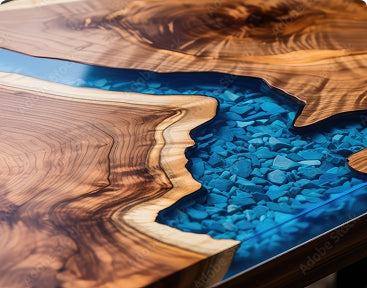
Our extensive range of epoxy resin products offers options for every need and budget, ensuring that you find the perfect fit for your project.
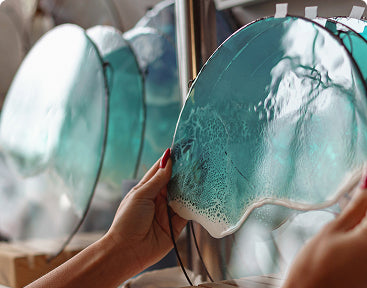
At Epoxy King, customer satisfaction is our priority. We strive to exceed your expectations with our products and service, earning your trust and loyalty.
When you choose Epoxy King, you can count on reliable products and dependable service every time. Trust us for all your food-safe epoxy needs and experience the difference.
Here’s a comprehensive FAQ that covers various aspects
Quality outdoor epoxy with proper UV stabilizers typically lasts 5-10 years before requiring recoating, depending on exposure conditions and use intensity. Full-sun locations experience faster degradation than shaded areas. High-traffic surfaces wear more quickly than decorative items. Regular maintenance and prompt damage repair extend coating life significantly. Recoating involves light sanding to create surface texture, cleaning thoroughly, then applying fresh epoxy. The existing coating doesn't need complete removal if it's still well-bonded and structurally sound, you're simply refreshing the UV protection and appearance.
Most outdoor epoxy requires application at temperatures between 50-90°F with relatively low humidity for optimal results. Cold temperatures dramatically slow curing and can prevent proper cure entirely below 50°F. High humidity introduces moisture that can cause clouding, blushing, or adhesion problems. If you must work in less-than-ideal conditions, some manufacturers offer cold-weather or moisture-tolerant formulations specifically designed for challenging environments. These products typically cure more slowly and may achieve slightly different final properties compared to standard formulations applied in ideal conditions.
Outdoor epoxy bonds well to most concrete surfaces when properly prepared, but some concrete conditions present challenges. New concrete must cure completely, typically 28 days, before epoxy application. Very smooth troweled concrete may need light grinding or acid etching to create adequate surface texture for mechanical bonding. Damaged, spalling, or contaminated concrete requires repair before coating. Concrete with active moisture problems isn't suitable for epoxy coating until the moisture source is eliminated. Surface preparation, including thorough cleaning and degreasing, determines bonding success more than concrete age or composition.
Marine epoxy formulations offer enhanced water resistance, flexibility, and impact resistance beyond standard outdoor products. They're designed for constant water immersion rather than occasional rain exposure. Marine epoxy typically includes additives that prevent osmotic blistering when water attempts to penetrate the coating. These formulations also resist saltwater corrosion and petroleum products common in marine environments. The trade-off is higher cost and sometimes longer cure times. For projects like outdoor furniture or concrete sealing that face weather but not submersion, standard outdoor epoxy provides adequate protection at lower expense.
Yes, adding appropriate colourants to outdoor epoxy doesn't diminish UV protection and actually helps hide any yellowing that occurs over time. Use pigments and dyes specifically designed for epoxy, typically alcohol-based liquid dyes or powder pigments. Mix colourants thoroughly into the resin component before adding hardener. Pigmented epoxy often appears to maintain clarity longer than transparent formulations because the added colour masks subtle amber shifts. However, use colourants judiciously, excessive amounts can affect cure speed and final hardness. Follow manufacturer guidelines for maximum pigment percentages, typically 3-6% by weight.
Small repairs involve sanding the damaged area to remove loose or delaminated material and create a mechanical bond surface. Clean thoroughly to remove sanding dust and contaminants. Mix fresh epoxy and apply it slightly overfilled into the damaged area, feathering edges to blend with surrounding coating. Allow full cure, then sand smooth if needed. Colour-matching repairs can be challenging with clear or tinted epoxy, the new material may not precisely match aged coating. For significant damage affecting large areas, complete recoating produces better aesthetic results than attempting extensive spot repairs that create a patchwork appearance.
Stop compromising on exterior durability. Epoxy King outdoor resin systems deliver professional-grade UV protection and weather resistance that keeps your projects looking new through years of sun, rain, and temperature extremes. Our formulations balance clarity retention with rock-solid durability, backed by detailed application guidance that ensures success. Browse our range of outdoor epoxy products and find the perfect solution for your furniture, concrete, or decorative projects today.